
Apparel Manufacturing
Production Capacity and Lead Times at a Garment Factory in Bangladesh
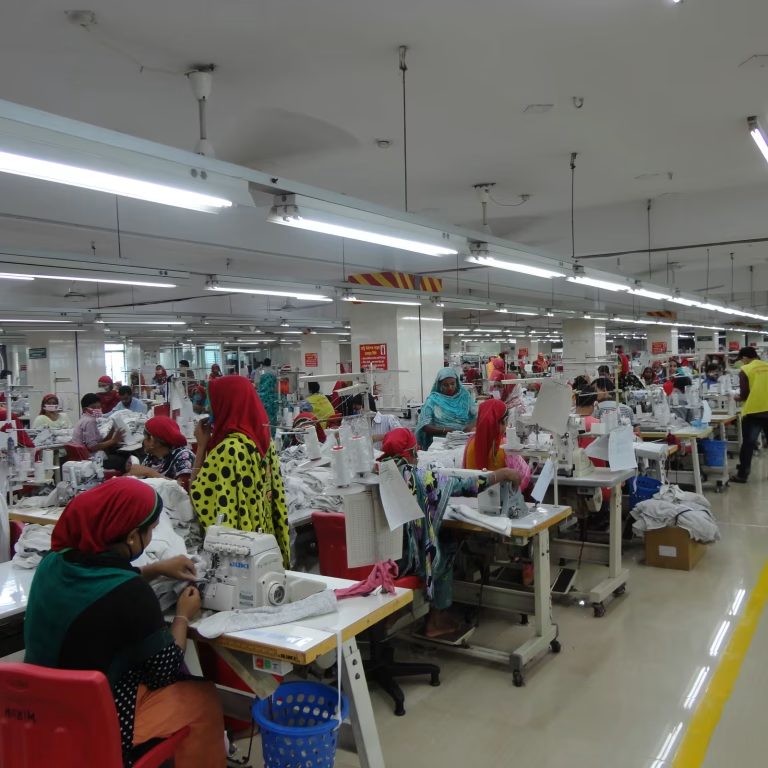
Production capacity and lead times decide an order before it starts. Huraira Fashion books line time per confirmed order, builds delivery dates from the fabric lead, the queue and the freight leg, and reports checkpoints as they pass, for buyers in the USA, UK, Germany, Canada and Australia.
- Materials: Fabric lead times planned backwards from your sewing window, with arrivals reported to you.
- Functionality: A single production calendar: capacity booked once at confirmation and never sold twice.
- Size: Programmes from 3,000 pieces covering two to three styles on one fabric type in basic types, scheduled as complete runs.
- Customization: Your required date tested honestly against the real calendar, with the nearest alternative offered when it cannot be met.
Simply The Best
PORTFOLIOS









Product Details
Production Capacity and Lead Times at a Garment Factory in Bangladesh
Production Capacity and Lead Times at a Garment Factory in Bangladesh
Two numbers decide whether an order succeeds before it starts: whether the factory has capacity in the weeks the order needs, and whether the lead time from approval to shipment fits the buyer selling date. This page explains how capacity is allocated here, what a lead time is actually made of, and how buyers in the USA, UK, Germany, Canada and Australia get honest dates from Huraira Fashion: dates built from the fabric lead, the production queue and the freight leg, quoted at order stage and reported against as the order runs.
- Capacity allocated per order against a live schedule
- Lead time broken into its real components
- Dates quoted at order stage, reported during production
- Honest options when a date cannot be met
How a Garment Manufacturer Allocates Capacity
Capacity in a sewing factory is not a warehouse shelf that empties and fills; it is line time, allocated order by order against a production calendar. When an order is confirmed, its cutting, sewing and finishing windows are booked into the schedule, and the fabric and trim arrivals are planned backwards from the sewing window. A programme is therefore never promised from general optimism: the question is always whether these styles, in these quantities, fit the open windows before the required ship date. If they do not, the buyer hears it at quotation, with the nearest workable date offered instead.
- Line time booked per order at confirmation
- Material arrivals planned backwards from sewing
- Promises made against open windows only
- Nearest workable date offered when full
This allocation discipline is also what protects buyers already in the schedule. A factory that accepts every order regardless of capacity is not being generous; it is spending the booked windows of its existing buyers on new promises. Here, an order that cannot fit is told so at the door, which is precisely why an order that is accepted can be reported against its checkpoints with a straight face. Capacity honesty at quotation and delivery honesty during production are the same habit at two different stages.
What a Lead Time Is Actually Made Of
A garment lead time has five components, and only one of them is sewing. Fabric production and delivery usually take the largest share, especially for dyed or custom fabrics. Sampling and approval take the second share, and they sit in the buyer hands as much as the factory. The production queue, the time an order waits for its booked window, comes third. Sewing, finishing and inspection follow, and the shipment leg closes the sequence. A quoted lead time that names these parts can be managed; a single round number with nothing behind it cannot, and buyers should be suspicious of both extremes, the impossibly short and the padded.
- Fabric lead: usually the largest component
- Sampling and approval: shared with the buyer
- Queue: the wait for the booked window
- Production, inspection and freight to close
How a Supplier Quotes a Delivery Date
The delivery date in a quotation is built backwards from the buyer required date or forwards from today, and the quotation states which. It accounts for the fabric the style needs, the sampling rounds still to run, the current queue, and the freight option selected. Where the date depends on a buyer action, an approval, an artwork file, a labelling detail, that dependency is named in the quotation, because the commonest cause of a missed date is not slow sewing but a decision that arrived two weeks after the schedule assumed it. Both sides then hold the same calendar.
- Date built and explained, not guessed
- Buyer-side dependencies named in the quotation
- Freight option included in the calculation
- One shared calendar for both sides
Peak Seasons and the Bangladesh Calendar
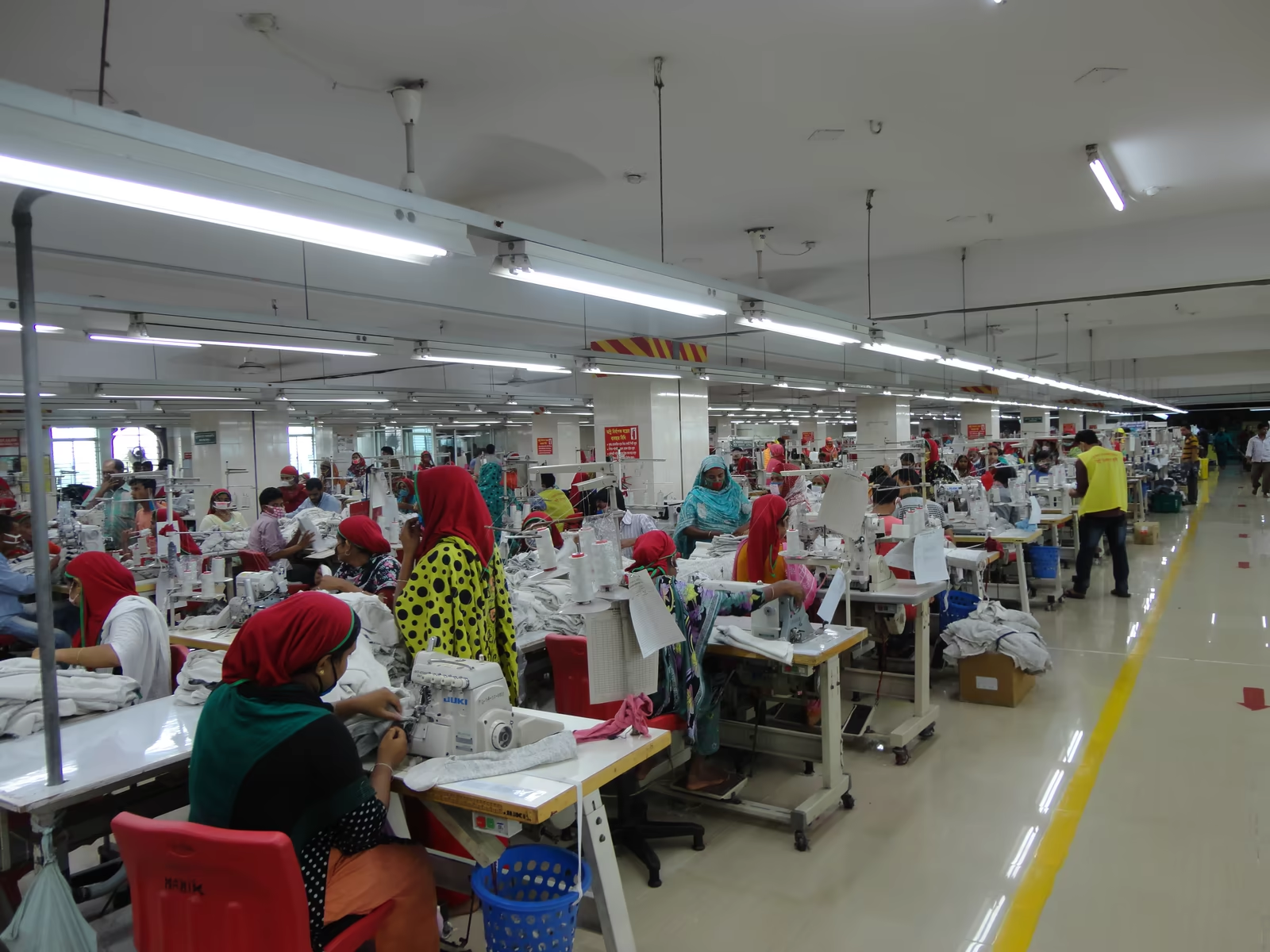
Garment capacity in Bangladesh breathes with the calendar. The weeks before the major Western retail seasons fill first, and production slows around the Eid holidays, when the workforce travels home and factories close or run short for a period. None of this is a surprise to anyone who plans for it: buyers who place seasonal orders early hold the best windows, and programmes quoted during a peak are quoted against the real calendar, holidays included. The quotation that ignores Eid or the pre-Christmas rush is not a faster quotation; it is a later shipment waiting to be discovered.
- Pre-season windows fill first every year
- Eid holiday periods planned into every date
- Early seasonal orders hold the best capacity
- Quoted dates include the real calendar
Rush Orders and What They Honestly Cost
A rush order is possible when three things align: the fabric is available or air-freighted, a production window can be opened, and the buyer approvals move at rush speed too. What a rush order cannot do is repeal the sequence: fabric, sample approval, cutting, sewing, inspection and documents still happen in order, compressed rather than skipped. Rush programmes usually cost more in freight and scheduling than in sewing, and the quotation separates those costs so the buyer can judge whether the date is worth them. Where a rush date truly cannot be met, the answer is no, given early, with the fastest honest alternative.
- Rush needs fabric, a window and fast approvals
- Stages compressed, never skipped
- Rush costs itemised in the quotation
- Impossible dates refused early, with alternatives
Buyers should also know what a rush programme does to quality risk, because the honest answer shapes the decision. Compression removes the slack that absorbs small problems: a fabric delivery a day late, a sample round needing one more correction. The control chain still runs in full, but it runs without margin, and a buyer choosing a rush date is choosing that exposure knowingly. Programmes where the garment is complex or the fabric untested are therefore advised against rush scheduling even when a window exists.
How an Exporter Keeps a Date Once Promised
Keeping a date is a reporting discipline as much as a production one. The order schedule carries checkpoints: fabric in house, cutting complete, sewing half and complete, inspection booked, documents issued. Each checkpoint passed is reported; each checkpoint at risk is reported earlier, while recovery options still exist: overtime on the affected operation, a split shipment, an air upgrade for the balance-critical styles. The buyer therefore never receives a surprise at the shipping week. In this process a late warning is treated as a defect in itself, on the same level as a sewing fault.
- Checkpoints across the whole schedule
- Passed checkpoints reported to the buyer
- At-risk dates flagged while options exist
- Late warnings treated as defects
What Buyers Can Do to Shorten Their Lead Time
Buyers control more of the lead time than most realise. Choosing a standard fabric from the running range instead of a custom development removes the longest single component. Approving samples and artwork within days rather than weeks returns those weeks to production. Freezing labelling and packing details at order stage prevents the end-of-line delays that consume the buffer. And ordering against the season calendar, rather than at its edge, buys the best production windows at standard prices. None of this requires the buyer to accept less; it requires the decisions to arrive in the order the schedule needs them.
- Standard fabrics remove the longest lead
- Fast approvals return weeks to production
- Labelling and packing frozen at order stage
- Seasonal orders placed against the calendar
There is one more buyer-side lever that costs nothing: information shared early. A buyer who signals a coming programme, approximate quantities and a target date before the formal enquiry lets the factory read the queue honestly and say which confirmation date secures which window. No commitment is created on either side by that conversation, but it converts the eventual order from a surprise into a plan, and plans are what production calendars are built from.
Lead Times for Buyers in the USA Planning Retail Seasons
Buyers in the USA plan backwards from retail floor dates that cannot move, so their lead time conversation starts at the shelf and ends at the fabric mill. The freight leg is chosen early, sea for the base programme and air reserved as the recovery option, and the production checkpoints are shared in the format their own planning uses. Programmes for American retail also build the inspection and any third-party checks into the quoted date rather than adding them at the end, because a date that forgets the inspection week is a date the receiving warehouse will correct.
- Planning backwards from immovable floor dates
- Freight leg chosen at the start
- Inspections built into the quoted date
- Checkpoints shared in buyer planning formats
Lead Times for Buyers in Germany Working to Fixed Slots
Buyers in Germany typically work to delivery slots booked with their warehouses and carriers well ahead, and programmes for this market treat the slot as the fixed point of the whole schedule. Production checkpoints are set so that a risk to the slot is visible weeks before it matters, documentation is prepared to the standard the slot requires, and the shipment is never the element left to chance at the end. The discipline suits the process here: a factory that reports by checkpoint and a buyer who plans by slot understand each other immediately.
- Warehouse delivery slot as the fixed point
- Risks visible weeks before the slot
- Documentation prepared to slot standard
- Checkpoint reporting matched to slot planning
Common Lead Time Failures and How They Are Prevented
The failures repeat because their causes repeat. A custom fabric approved late consumes the production window, so fabric decisions sit at the front of the schedule. A sample approved verbally and then changed restarts sampling invisibly, so approvals are written. A queue promised twice sells the same window to two orders, so capacity is booked once, at confirmation, in a single calendar. And a date quoted without the freight leg flatters the buyer until the vessel sails, so every quoted date in this process names the leg it assumes.
- Fabric decisions placed at the front
- Written approvals prevent invisible restarts
- Capacity booked once in a single calendar
- Every quoted date names its freight leg
Questions Buyers Ask About Capacity and Lead Times
How early should we place a seasonal order?
As early as the range allows. Seasonal windows fill in order of confirmation, and the fabric lead alone justifies starting a full cycle ahead of the selling season. The quotation will show the date arithmetic for your programme specifically.
Can you hold capacity for us before we confirm?
Capacity is booked at order confirmation, because holding windows without commitment would sell the same time twice. What can be given before confirmation is an honest reading of the current queue and the date a confirmation today would secure.
What happens if our approval is delayed?
The schedule moves by the length of the delay, and the revised date is confirmed in writing as soon as the approval lands. Where the original date still matters, recovery options are priced and offered rather than assumed.
Do you report progress against the date?
Yes. Checkpoints are reported as they pass, and any risk to the date is reported when it appears, with the recovery options. The shipping week should never contain the first bad news.
Dates You Can Plan a Season Around
Capacity and lead time are, in the end, a promise-keeping system: a calendar booked once, components named honestly, checkpoints reported as they pass. Send the style, the quantity and the date you need, and the answer will be a date built from the real components, or an honest nearest alternative, before any commitment is asked of you.
- Send style, quantity and required date
- Receive a date built from real components
- Book capacity at confirmation
- Follow checkpoints to the shipment
A season planned on real dates sells differently from one planned on hopes: photography, marketing and floor space can all be booked against the same calendar the factory is working to, and that shared certainty is worth more than a optimistic date ever is.