
Apparel Manufacturing
Custom Cut and Sew Hoodie Manufacturer in Bangladesh for UK and EU Brands in Thessaloniki
We manufacture custom cut and sew hoodies in Bangladesh for UK and EU brands: your pattern cut from your chosen cloth and sewn to your construction sheet, so fit, panels, colour blocking and hood construction are your design decisions, never catalogue options.
- Materials: Your specified fabrics at 280 to 400 GSM, including blends, heathers and contrast panel cloth, approved on submissions for weight, shade and shrinkage and wash-checked on the sample before cutting.
- Functionality: Pattern led production: patterns graded to your chart with shrinkage allowances built in, first piece measured against your construction sheet, seam types and stitch density audited during sewing, finished garments compared with the standard.
- Size: Men's, women's and youth sizes XS to 3XL graded from your block, with the extremes sampled and corrections made as pattern changes.
- Customization: Complete: colour blocking, mixed fabrics, your hood and pocket construction, your woven neck label, tags and packing, with patterns and designs held for your brand only.
Simply The Best
PORTFOLIOS
Product Details
Custom Cut and Sew Hoodie Manufacturer in Bangladesh for UK and EU Brands in Thessaloniki
What Does a Custom Cut and Sew Hoodie Manufacturer in Bangladesh Give UK and EU Brands That Blanks Cannot?
A garment that starts as cloth, not as somebody else’s product. We manufacture custom cut and sew hoodies in Bangladesh for UK and EU brands: your pattern is cut from your chosen fabric and sewn to your construction, so fit, panels, colour blocking, pocket shapes and hood construction are design decisions, not catalogue options. A decorated blank can only ever be a blank with your print on it; a cut and sew hoodie is yours from the first panel.
That difference decides what a brand can sell. Silhouette, proportion and detail are where fashion value lives, and all three are fixed before a blank is ever printed. Cut and sew production hands them back to the designer.
- Patterns cut from your fabric to your measurements
- Panels, blocking and construction as designed
- Fit blocks owned by your brand’s file
- Samples built exactly as bulk will be built
- Nothing sourced as finished blanks
Cut and sew, defined plainly
Fabric arrives as cloth; patterns are graded to your chart; panels are cut, including contrast panels where the design calls for them; and the garment is sewn panel by panel to your construction specification. Every seam, stitch density and trim placement is therefore a chosen detail, checked against your sample, rather than an inherited one.
- Cloth cut to graded patterns
- Contrast panels cut and matched deliberately
- Seam types and stitch density specified
- Trims placed per your construction sheet
- Each panel checked before assembly
The garment on this page
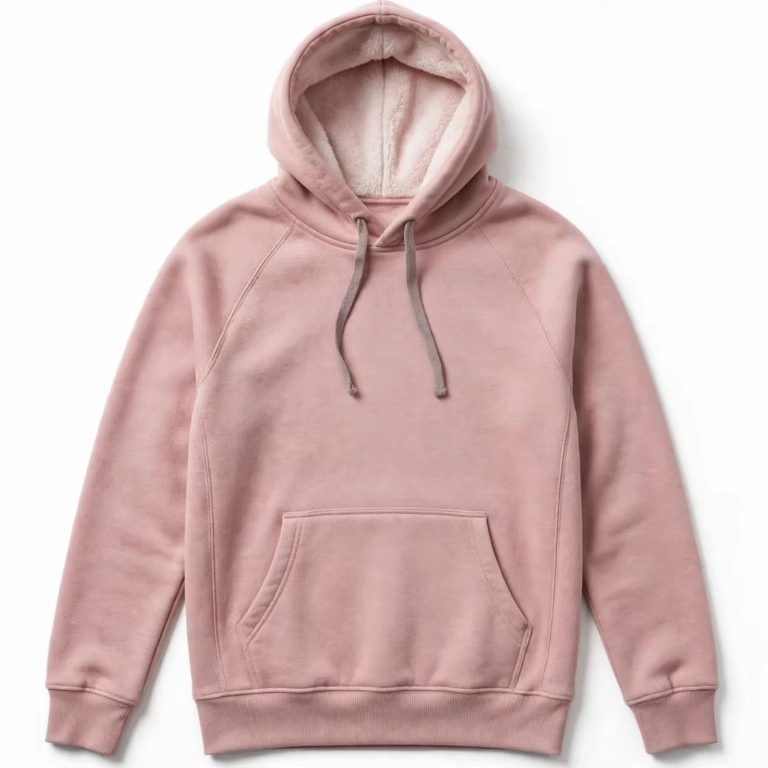
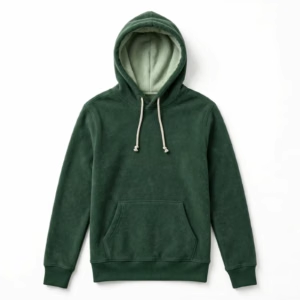
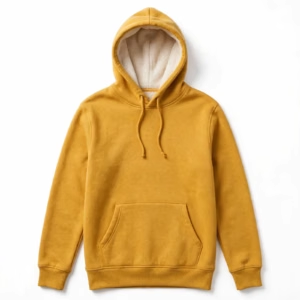
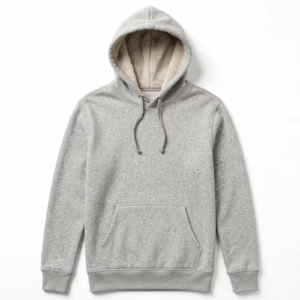
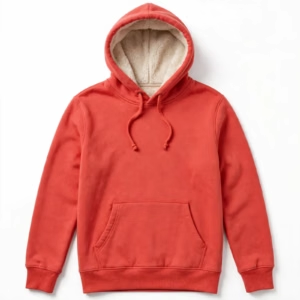
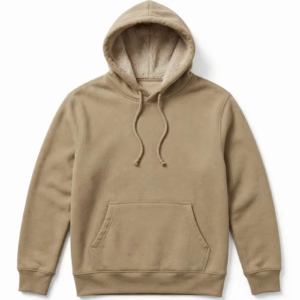
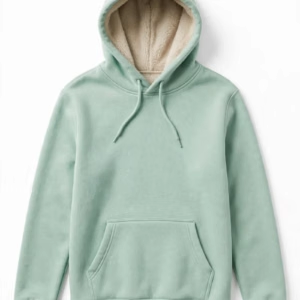
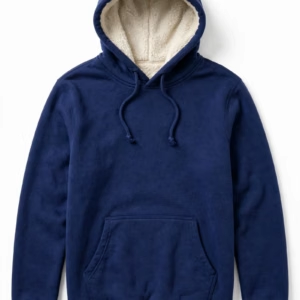
The dusty pink hoodie pictured is a clean cut and sew base: panels cut and sewn with visible, deliberate seams, kangaroo pocket, drawstring hood and ribbed trims, in a soft fashion shade. Shown plain, it demonstrates the point: the design here is the garment itself, its cut and construction, before any artwork is discussed.
- Panels cut and sewn, no blank garment anywhere
- Kangaroo pocket placed by pattern
- Hood constructed to the design sheet
- Ribbing matched to the body fabric
- Soft fashion shade dyed to approval
How Does Cut and Sew Production Work for UK Brands at a Hoodie Factory in Bangladesh?
Pattern first, then cloth. For UK brands at our hoodie factory in Bangladesh, your tech pack or reference becomes a graded pattern; fabric is approved for weight, shade and shrinkage; panels are cut with shrinkage allowances built into the pattern; and sewing follows your construction sheet with the first piece measured and approved before the run proceeds. British buyers receive garments whose measurements survive washing because the pattern anticipated it.
- Patterns graded to your chart
- Shrinkage allowances built into cutting
- Fabric approved before panels are cut
- First piece measured before the run
- Construction followed from your sheet
Colour blocking and panel design
Cut and sew is what makes real colour blocking possible: body, sleeves, hood and pocket in different colours or fabrics, cut as panels and joined cleanly. Panel joins are matched and checked, contrast stitching specified where wanted, and the sample proves the construction before bulk commits to it.
Fit as a brand asset
A blank’s fit belongs to the blank maker; a cut and sew fit belongs to you. Oversized, cropped, longline or classic blocks are graded from your measurements and kept in your file, so your silhouette stays yours across seasons and cannot be bought by a competitor from the same catalogue.
- Fit blocks built from your measurements
- Blocks kept in your brand’s file
- Silhouette consistent across seasons
- Extremes sampled before bulk
- Adjustments recorded as pattern changes
Which Construction Details Matter in Cut and Sew Hoodies for EU Brands in France and Spain?
Seams, hood construction and rib quality, because those are what hands find first. For EU brands in France and Spain, our cut and sew hoodies specify seam types per panel join, hood lining and drawstring finishing, rib recovery tested on samples, and stitch density held uniform across the garment. Fashion markets judge construction at a touch, and the specification is written for that judgement.
| Construction element | Cut and sew choice | Why it matters |
|---|---|---|
| Panel seams | Seam type and stitch density specified | Strength, comfort and a clean fashion finish |
| Hood | Lined or unlined, crossover or standard neck | Shape at the neck and how the hood sits |
| Ribbing | Weight and recovery matched to the body | Cuffs and hems that keep their grip |
| Shape, placement and reinforcement set by pattern | A pocket that sits square and lasts |
- Construction sheet followed panel by panel
- First piece checked against every detail
- Rib recovery tested on the sample
- Stitch density uniform across the garment
- Finished garments compared with the standard
Standards behind the construction
Production runs through established facilities whose working standards are checked order by order, within the BGMEA member framework. EU brands receive documented answers to due diligence questions from the order file, where construction and compliance records sit together.
- Working standards checked order by order
- Compliance framework of the industry body
- Construction records kept with the order file
- Specific answers to specific questions
- The same standards across all panels and sizes
Fabric choice is wider from cloth
Working from cloth opens fabrics blanks never offer: weights from 280 to 400 GSM, blends, heathers and finishes selected for the design rather than accepted from a stock list. Each is approved on submissions and wash-checked on the sample before cutting begins.
Can a Cut and Sew Hoodie Supplier in Bangladesh Reproduce a Brand’s Fit Exactly at Reorder?
Yes, because the pattern is the memory. As a cut and sew hoodie supplier in Bangladesh for UK and EU brands, we keep your graded patterns, construction sheet and approved sample on file; new fabric lots are tested against the same bands, shrinkage behaviour is rechecked, and reorders are cut from the same patterns and audited against the original standard. Your fit is therefore a stored asset, not a renegotiation.
- Graded patterns kept on file
- Construction sheet stored with the patterns
- Lots retested for shrinkage behaviour
- Reorders audited against the standard sample
- Pattern changes only on your instruction
Developing new styles on a proven block
Once a fit block is proven in your market, new styles can be developed on it: a colour blocked variant, a new pocket, a different hood, each sampled against the block your customers already trust. Our UK streetwear programme and UK cotton fleece programme both build on brand blocks this way.
What cut and sew asks of the buyer
A tech pack or a reference garment, and decisions at the sample stage. In return it gives the brand full ownership of fit and construction. Brands that have made the shift rarely return to blanks, because the difference is visible in every photograph their customers post.
How Do UK and EU Brands Start a Cut and Sew Hoodie Order in Bangladesh?
Send the design as a tech pack or a reference garment, with fabric and colour requirements. As a custom cut and sew hoodie manufacturer in Bangladesh for UK and EU brands, we build the pattern, cut and sew the sample in your fabric, correct it with you, and produce only on your written approval, with patterns and construction filed for every reorder.
- Tech pack or reference garment first
- Fabric and colour submissions for approval
- Pattern built and sample sewn in your cloth
- Corrections recorded as pattern changes
- Bulk only after your written approval
What to send at the start
Your design files, measurements, fabric requirements and construction notes travel through our contact page. If you are converting an existing blank based style to cut and sew, send the garment your customers love; its fit becomes the starting block.
From first sample to house block
The first approved sample settles more than one style: it proves the block, the construction standards and the fabric behaviour your whole range can build on. Later styles then sample faster, because the foundations are already measured and trusted.
- First sample proves block and construction
- Foundations reused across the range
- Patterns and standards filed together
- New styles sampled against proven bases
- One contact path throughout
How Are Cut and Sew Hoodie Samples Approved by UK and EU Brands Working with Bangladesh?
In stages, against the pattern. UK and EU brands approving cut and sew samples from Bangladesh receive the sample sewn from the actual production pattern in the actual fabric, measure it against their chart, wash it, and return corrections that are answered as pattern changes, not sewing adjustments. That distinction is the whole method: a fit fault corrected in the pattern is corrected in every size and every future reorder at once.
- Sample sewn from the production pattern
- Measurements reported size by size
- Wash test on the sample before approval
- Corrections made as pattern changes
- Approved sample kept as the standard
Why pattern corrections beat sample corrections
A sample can be coaxed into fitting by a skilled machinist in ways a production line cannot repeat five thousand times. Correcting the pattern instead means the line reproduces the fit mechanically, size after size, which is why cut and sew sampling takes the pattern as seriously as the garment.
- Fit fixed at pattern level, not by hand
- Grading checked at the size extremes
- Every correction re-sampled and re-measured
- Construction details proven on the sample
- Bulk cut only from the approved pattern
The design freedom this protects
Because the pattern is yours, the design conversation can be honest about ambition: unusual panel lines, asymmetric pockets, mixed fabrics, dropped shoulders, all sampled and judged as real garments. Brands discover quickly that the limiting factor becomes taste rather than a blank supplier’s catalogue, and ranges built that way look like nothing else on the rail.
That distinctiveness compounds commercially. A silhouette customers recognise as yours cannot be undercut by a competitor decorating the same blank, so the design investment stays inside your brand where it belongs.
Cut and Sew Hoodie Questions UK and EU Brands Ask a Bangladesh Manufacturer
How is cut and sew different from printing on blanks?
Blanks are finished garments made to someone else’s pattern, decorated afterwards. Cut and sew starts from cloth: your pattern, your fabric, your construction, sewn panel by panel. Fit, panels and details are designed rather than inherited.
Can you match the fit of a garment we already sell?
Yes. Send the reference garment and its measurements are taken into a graded pattern, sampled in your fabric and corrected with you until the fit matches. The resulting block is kept in your file for reorders.
Is colour blocking possible?
Fully. Panels are cut in different colours or fabrics and joined to your construction sheet, with joins matched and checked on the sample before bulk. Colour blocking is one of the main reasons brands choose cut and sew.
Does cut and sew cost more than blanks?
It is a different product, not a dearer decoration: the comparison belongs against other made garments, not against blank prices. What it returns is ownership of fit and design, which is where a fashion brand’s margin actually lives.
How is construction quality checked?
Against your construction sheet: seam types, stitch density, hood and pocket construction verified on the first piece, audited during sewing, and finished garments compared with the approved standard before packing.
Will reorders keep the same fit?
Yes. Patterns, construction sheets and the standard sample are kept on file; lots are retested, reorders are cut from the same patterns and audited against the original standard before shipment.
What does a first enquiry need?
A tech pack or reference garment, measurements, fabric and colour requirements, and construction notes. With those, the pattern and sample path can be set out completely in one reply.
Can mixed fabrics be used in one garment?
Yes. Panels in different fabrics, for example a fleece body with rib or mesh panels, are cut and joined to the construction sheet, with shrinkage behaviour of each fabric tested so the joined garment washes as one piece.
How long does the pattern stage take?
It is set out in the first reply against your design’s complexity. What matters more than the days is the sequence: pattern, sample in your fabric, measured corrections, then bulk, with no stage borrowed from the next.